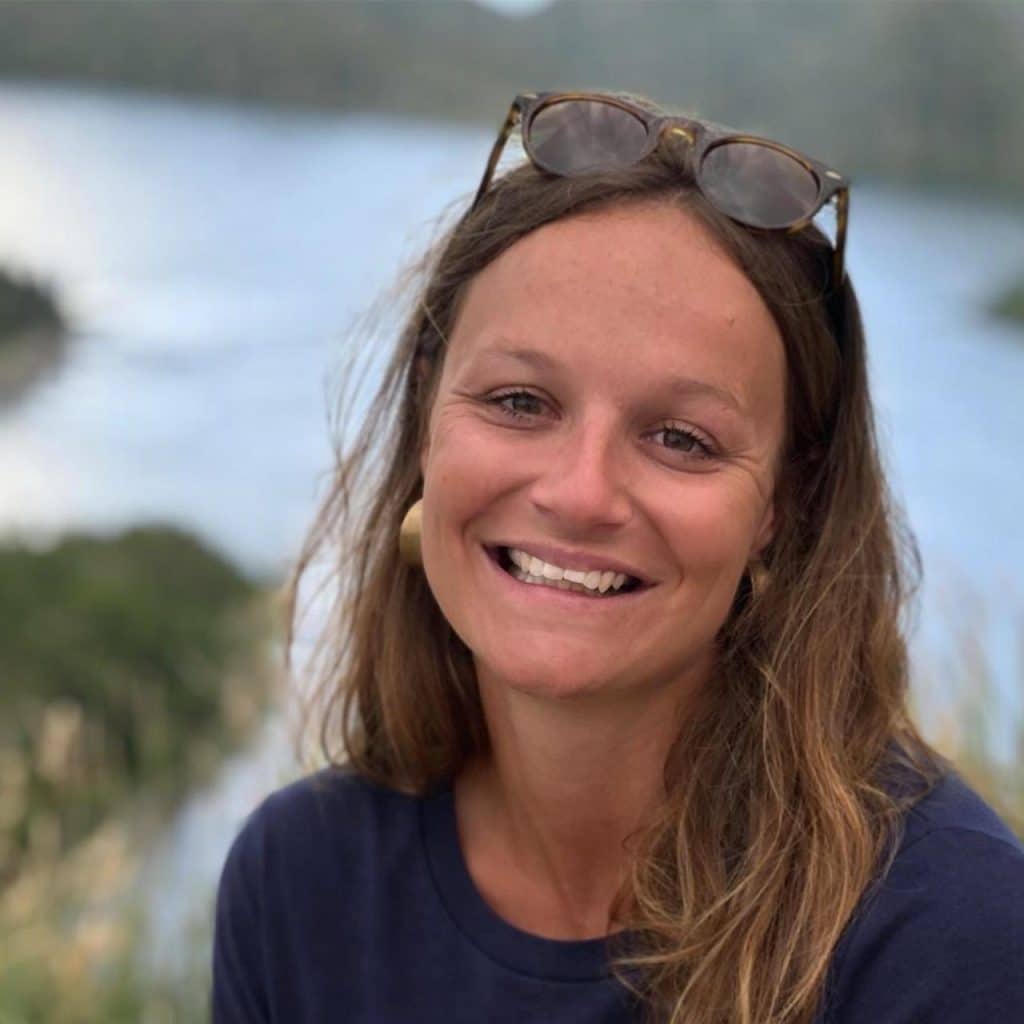




Pauline Le Coq will defend his thesis on Friday 30 October 2026 à 13h00 at the Amphithéâtre Océanomed on the theme : Activities and functional diversity of prokaryotic communities in the mesopelagic ocean: implications for the carbon budget.
Composition of the jury
- Eva ORTEGA-RETUERTA Rapporteur, Research Fellow, HDR, CNRS
- Loïs MAIGNIEN, Rapporteur, Senior Lecturer, HDR, UBO
- Brivaëla MORICEAU Examiner, Research Supervisor
- Olivier PRINGAULT, Chair of the jury, Research Director at the IRD
- Christian TAMBURINI PhD supervisor, CNRS research director
- Fabrice ARMOUGOM Co-supervisor of the PhD thesis Research Engineer at the IRD
- Christel HASSLER Guest Member, Associate Professor
Abstract
The mesopelagic zone of the ocean, situated at depths of between approximately 100 and 1,000 metres, is a key area for the transformation of carbon exported from the surface, before a fraction reaches the deep ocean where it can be sequestered for the long term. Prokaryotes play a central role in the fate of organic matter through their heterotrophic activities. However, their estimated carbon demand frequently exceeds the supply of particulate organic carbon. Alongside prokaryotic heterotrophic production (PHP), the fixation of dissolved inorganic carbon without solar energy (DCF), notably through chemoautotrophy, constitutes a source of organic carbon that may help to redress this imbalance.
This thesis aims to provide a more accurate assessment of the contribution of prokaryotes to the mesopelagic carbon cycle by considering these two processes jointly. The research, carried out mainly during the APERO expedition in the North-East Atlantic, distinguishes between «suspended» prokaryotes (free-swimming and attached to suspended particles) and those associated with sinking particles. The combination of activity measurements, molecular approaches and metagenomic analyses has enabled us to examine their contributions according to their lifestyle, depth and oceanographic context.
Among suspended prokaryotes, DCF exceeds PHP and exhibits high spatial variability in response to mesoscale structures. When aggregated at the mesopelagic zone scale, it can account for up to 50 % of carbon inputs, depending on the station. Conversely, prokaryotes associated with falling particles exhibit predominantly heterotrophic activity and a higher activity per cell than that of suspended communities. Their contribution to prokaryotic carbon demand reaches up to 21 %, highlighting their active role in the transformation of exported organic matter. These differences in activity are accompanied by significant taxonomic and functional differentiation. Suspended communities are mainly structured according to depth, whilst those associated with sinking particles vary greatly between stations, suggesting an influence of the origin and composition of the exported particles. Chemoautotrophic communities also differ in their carbon fixation pathways and energy acquisition strategies, which extend beyond the nitrification traditionally associated with DCF. Analysis of polysaccharide degradation potential reveals a broad shared functional repertoire, but one that is represented differently according to lifestyle, with a particularly well-developed enzymatic arsenal in communities associated with falling particles.
Finally, this thesis explores the dynamics of prokaryotic communities at the level of individual particles. An experimental approach simulating the descent of particles in the mesopelagic zone and the associated variations in hydrostatic pressure made it possible to track the transformation of their microbiome as they descended. The evaluation and optimisation of long-read 16S metabarcoding approaches have made it possible to analyse this scale of very low biomass with taxonomic resolution
right down to the species level, paving the way for the study of particles as individual microhabitats whose communities reorganise themselves as they are transported.
Overall, this thesis reveals that the contribution of prokaryotes to the mesopelagic carbon cycle is shaped by the heterogeneity of their environment, ranging from mesoscale physical structures to microhabitats formed by falling particles. Taking this diversity of lifestyles, activities and metabolic capacities into account therefore appears essential for better understanding the fate of exported carbon and the mechanisms that determine the efficiency of its sequestration in the deep ocean.