



Le Tuesday 18 November 2025 from 13:00 to 14:00 in the OCEANOMED Amphitheatre
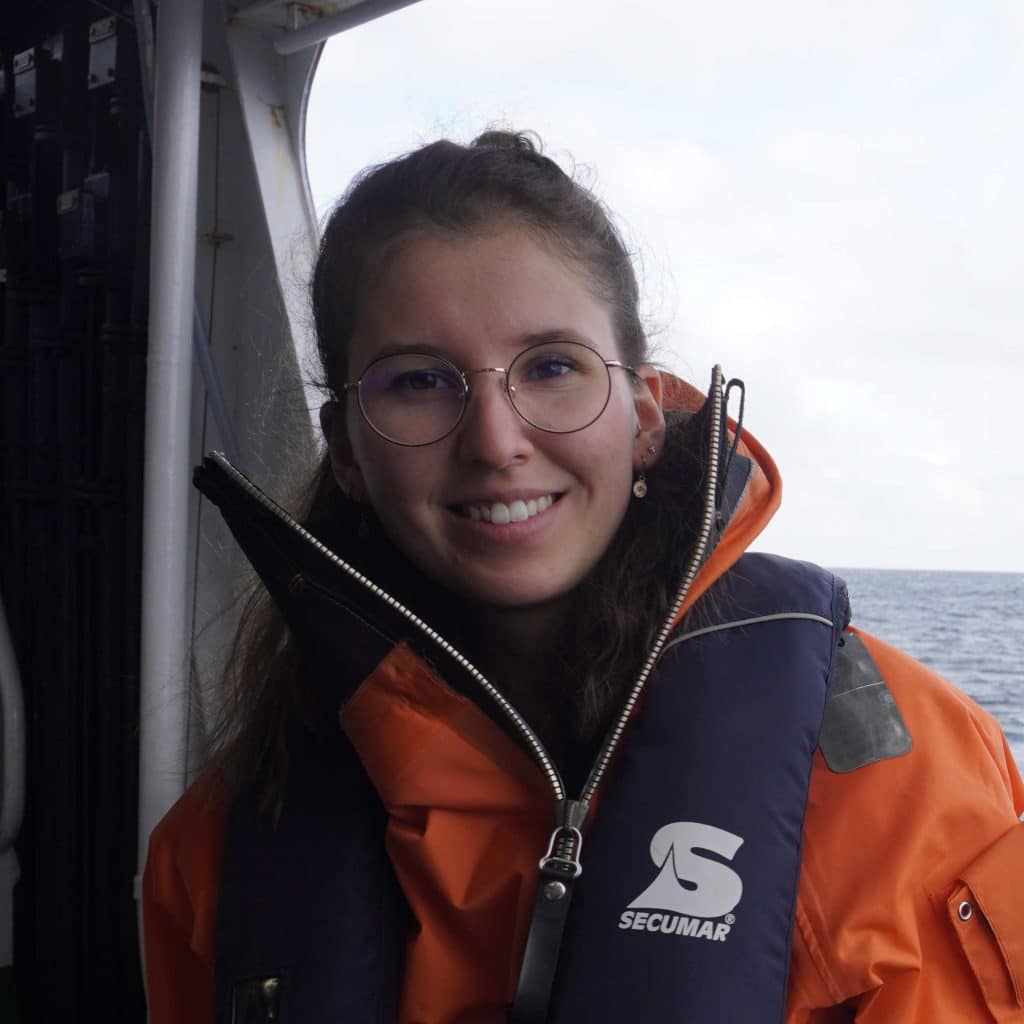
Seminar on Cathy Wimart-Rousseau, Research Scientist at the National Oceanographic Centre, Southampton, UK.
Title : From the Mediterranean Sea to the Atlantic Ocean: combining approaches to reveal the ocean carbon cycle.
Abstract : The ocean plays a central role in the global carbon cycle, absorbing a significant proportion of CO₂ emissions and regulating the climate. Yet inorganic carbon exchanges at the air-sea interface vary greatly in space and time, and understanding them remains a major challenge.
The Mediterranean and the North Atlantic offer a fascinating contrast for studying these dynamics. In the Mediterranean basin, where the rapid renewal of water masses coexists with coastal inputs and variations in alkalinity, pH is falling and CO₂ fluxes are already changing under the impact of climate change. These local variations underline the importance of monitoring the sensitivity of the system to regional processes. In the North Atlantic, anthropogenic carbon stocks are increasing overall but show strong spatial and interannual variability, modulated by the North Atlantic Oscillation (NAO) and ocean circulation (AMOC).
To fully understand this variability and its mechanisms, it is essential to have accurate and continuous measurements of the marine CO₂ system. The BGC-Argo floats, equipped with pH sensors, now make it possible to observe this variability at different depths and over the long term. However, the quality of the measurements remains crucial for deriving reliable air-sea fluxes and linking local variations to regional and global processes. By highlighting the complementary nature of the various observation tools, this presentation shows how an integrated approach makes it possible to better quantify the ocean carbon cycle and anticipate its future evolution in the face of climate change.