



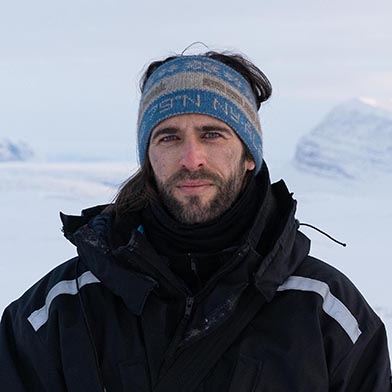
James’ research examines the biological and biogeochemical processes governing energy and nutrient cycling on Earth, shaping life and climate across past, present, and future timescales. His work spans cryospheric, marine, subsurface, and terrestrial environments, focusing on microbial ecology, bioenergetics, and the global carbon cycle, united by themes of life in extreme environments and climate change. His research includes glacial geomicrobiology, investigating how glacier- and ice-sheet microbes influence biogeochemical cycling. He also studies microbial processes in Arctic soils and thawing permafrost, using -omics, geochemistry, and microbe-centric modelling. He also investigates microbial survival in the atmosphere, and the deep subsurface, to understand adaptation to extremes and subsurface limits to life using bioenergetic and biogeochemical models.
Postdocs: Eloi Martinez Rabert
PhD students: Sibylle Lebert & Laura Molares Moncayo
SIESTA is an ERC Starting Grant funded by the European Union. It investigates how microbial dormancy enables survival through environmental change and how shifts between active and dormant states regulate evolution and biogeochemical cycling.
Is the atmosphere an ecosystem? is an HFSP-funded project testing whether airborne microbes are structured, metabolically active, and adapted to life in air, and how they influence biogeochemical cycling, biodiversity, and planetary habitability.