



Presentation
An interdisciplinary research laboratory
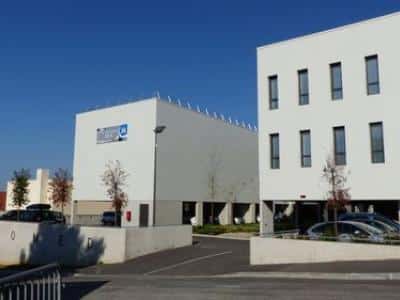
The M.I.O is an oceanology research laboratory run by the Universities of Aix-Marseille and Toulon, the CNRS and the IRD. It is part of the OSU Pytheas.
Its objectives are to gain a better understanding of the oceanic system and its evolution in response to global change. It is a centre of expertise in marine biology, ecology, biodiversity, microbiology, fisheries, physics, chemistry, biogeochemistry and sedimentology. It focuses on the world ocean, its interfaces with the continent, the atmosphere and sediments.
M.I.O is :
- A staff of 230, including around a hundred researchers (CNRS, IRD) and university lecturers, around fifty engineers and technicians, more than seventy doctoral and post-doctoral students, as well as a team of administrative staff to support research.
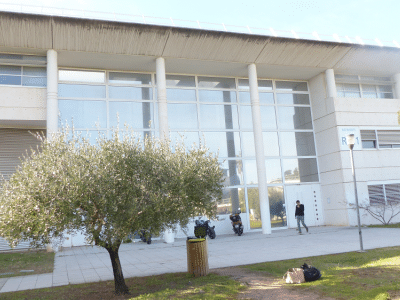
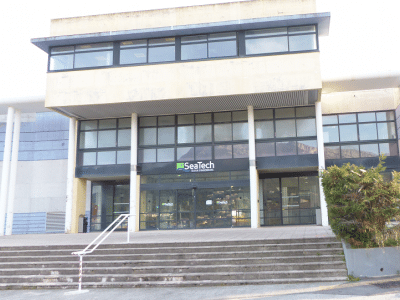
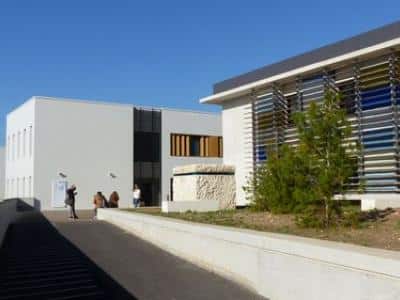
- 5 sites: the Marseille-Luminy campus, the University of Toulon, the IFREMER Marine Base at La Seyne-sur-Mer and the IRD Centre in Nouméa (New Caledonia).
- 6 subject teams
- 5 challenges, 5 technical shared services, 5 transverse technical platforms/platforms and 3 technical platforms (CEM team)
- A marine environment observation service within OSU-Pythéas, supported by the coastal oceanology vessel L'Antédon II
MIO scientists carry out research in the fields of :
- oceanic and atmospheric circulation
- understanding marine ecosystems and biodiversity, from bacteria to fish
- biological functioning in extreme environments and ocean pollution.
This research requires oceanographic campaigns, the use of submerged instruments equipped with sensors (buoys, towed instruments, 'gliders' or underwater drones), radars installed on the coast and satellite image analysis, as well as analytical and experimental laboratory resources. This research involves numerical analysis and modelling. These research themes are part of national research projects such as MERMEX/MISTRALS, HYMEX/MISTRALS, LEFE/CNRS, EC2CO/CNRS and international research projects of the IGBP within the IMBER, SOLAS and LOICZ programmes and require work on all the world's oceans.