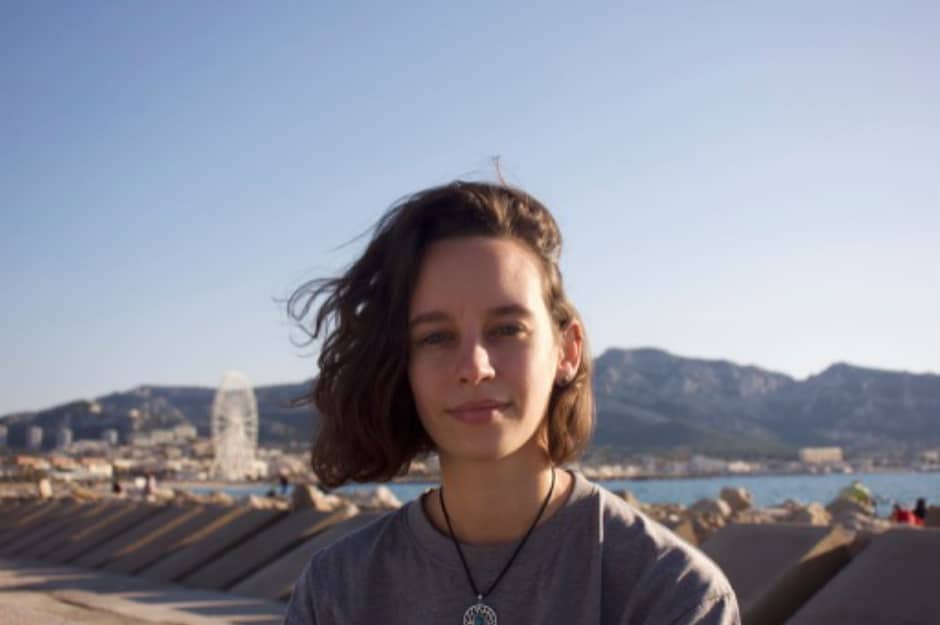




Marine Laval defended his thesis on Friday 5 December 2025 at 2.00 pm (Paris time), Salle S1, UFR Sciences - Technologies - Environnement, Campus Universitaire de Schoelcher (Martinique) on the following topic: The role and impact of winds on the distribution of sargassum in the Atlantic Ocean: a regional approach focusing on the Lesser Antilles.
Members of the Jury
- Fotsing Jean-Marie, Rapporteur - PR, University of New Caledonia
- Deschinkel Karine, Rapporteur - PR, Université de Franche-Comté
- Duval Elisabeth, Examiner - DR, INRAE de Tours
- Hasler Maximilian, Examiner - PR, Université des Antilles
- Priam Fabienne, Examiner - MCF, Université des Antilles
Dorville René, Thesis Director - PR, Université des Antilles - Chevalier Cristèle, Co-supervisor - DR, University of Aix Marseille
- Zongo, Pascal, Co-supervisor - MCF, Université des Antilles
Abstract
This thesis is part of an effort to improve our ability to forecast the movement of Sargassum in the Atlantic Ocean, with a study focusing on the Lesser Antilles. It aims to gain a better understanding of the influence of wind, one of the main physical forcings affecting the drift and distribution of Sargassum rafts. Two complementary approaches have been developed: remote sensing analysis and numerical modelling. An original dataset (2019-2022) was compiled from the Sentinel-2 (MSI) and Sentinel-3 (OLCI) sensors, using convolutional neural networks (CNN) of the encoder-decoder type. This method enabled more accurate detection of Sargassum than conventional methods based on remote sensing indices, both in coastal areas and at regional scale. Analysis of the OLCI images revealed the effect of wind on the coverage and size of Sargassum aggregations. Agglomeration and fragmentation processes coexist at all scales, but their relative contribution depends on the wind regime and the size of the aggregations: for weak to moderate winds (2-9 m/s), small structures tend to agglomerate while larger ones fragment; for strong winds (> 9 m/s), fragmentation dominates whatever the size. Geography also modulates these dynamics: coastal areas tend to fragment the rafts, while the arc of the Lesser Antilles acts as an accumulation zone. Finally, a numerical drift model has been developed to assess the respective contributions of wind and current to the displacement of aggregations. A new interparticle cohesion forcing, inspired by collective movement models, was integrated in order to preserve the spatial coherence of the simulated aggregations. This approach improves the representation of drift and opens up promising prospects for the operational prediction of groundings. Overall, this work combines remote sensing and modelling to improve our understanding of the mechanisms of agglomeration, fragmentation and drift of sargassum, thereby contributing to the improvement of warning, management and adaptation tools in the face of this growing phenomenon.
Key words
Sargassum, Spatial distribution, Oceanic drift, Wind, Deep Learning, Convolutional neural networks (CNN), Remote sensing, OLCI, MSI, Numerical modelling, Tropical Atlantic, Lesser Antilles