



La WHIRLS oceanographic expedition (ERC-Synergy project; co-PI: S. Speich, ENS Paris) is a major international two-vessel campaign off the Cape Basin (Southern Ocean), bringing together around a hundred scientists from France, Sweden, Germany and South Africa, with the aim of gaining a better understanding of how small-scale ocean eddies influence ocean circulation, the exchange of heat, carbon and nutrients with the atmosphere, and the climate.
To monitor these highly dynamic phenomena, the mission enabled the deployment of a unique set of autonomous observation platforms.
In this context, a glider from the National Glider Instrumentation Programme (PING), managed by the MIO/OSU technical team, was deployed from the R/V Marion Dufresne for 16 days.
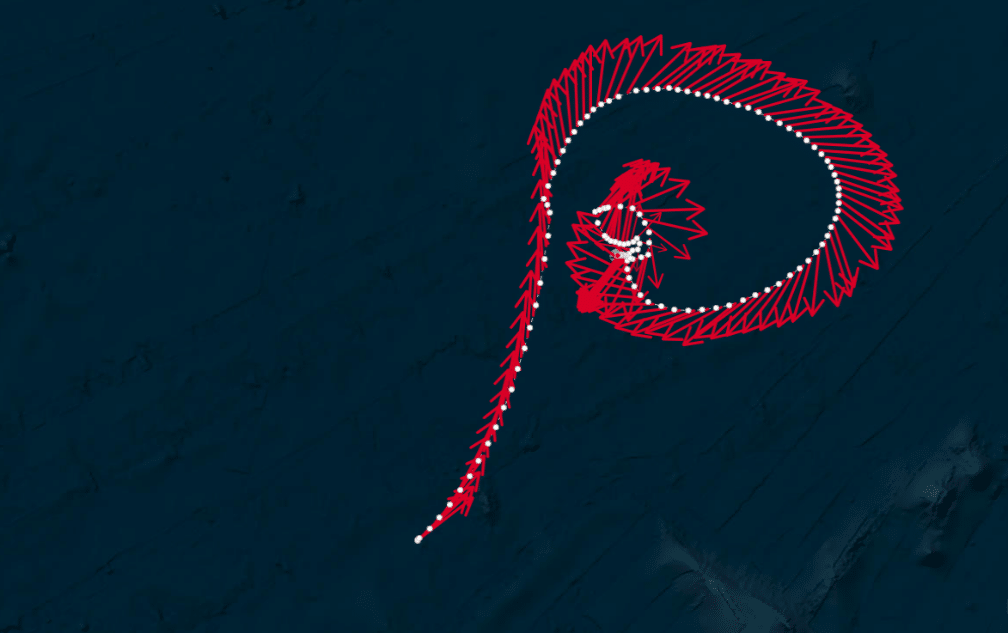
This mission enabled the collection of a dataset covering a distance of nearly 700 km, linking a high-pressure system and the centre of a low-pressure system, with repeated profiles down to a depth of 1,000 m.
The high-resolution measurements obtained make it possible to reconstruct temperature, salinity and biogeochemical parameters. Furthermore, this glider had the unique feature of being equipped with a particle and plankton imaging system (UVP6). Complementing the other autonomous platforms and ship-based observations, these data will help characterise the coupling between physical dynamics and biology, as well as the carbon fluxes associated with this eddy, thereby improving our understanding and modelling of the processes that govern the functioning of the ocean and the climate.
- BHAIRY Nagib, MIO
- BOSSE Anthony, MIO, OSU PYTHEAS
- FUDA Jean-Luc, OSU PYTHEAS
- Christopher LUNEAU, OSU PYTHEAS
- Lars STEMMANN, IMEV-LOV
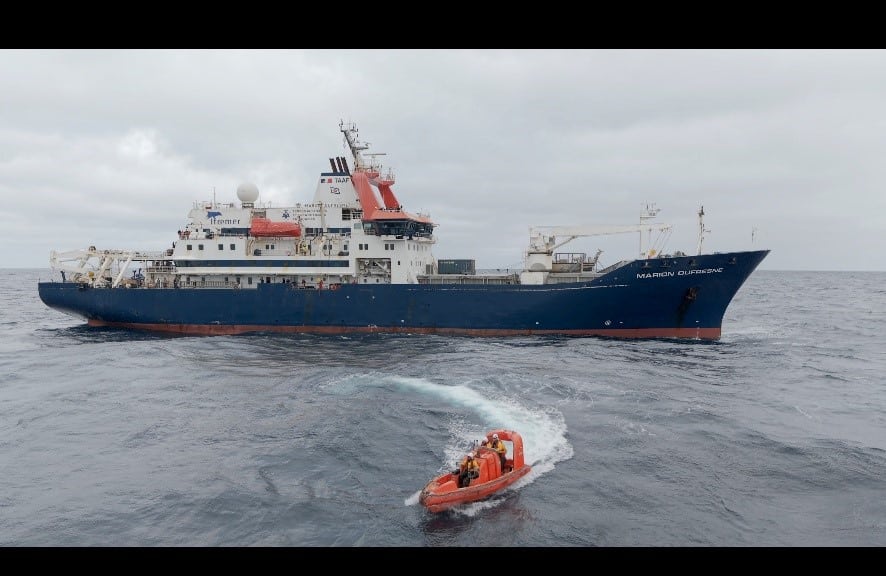
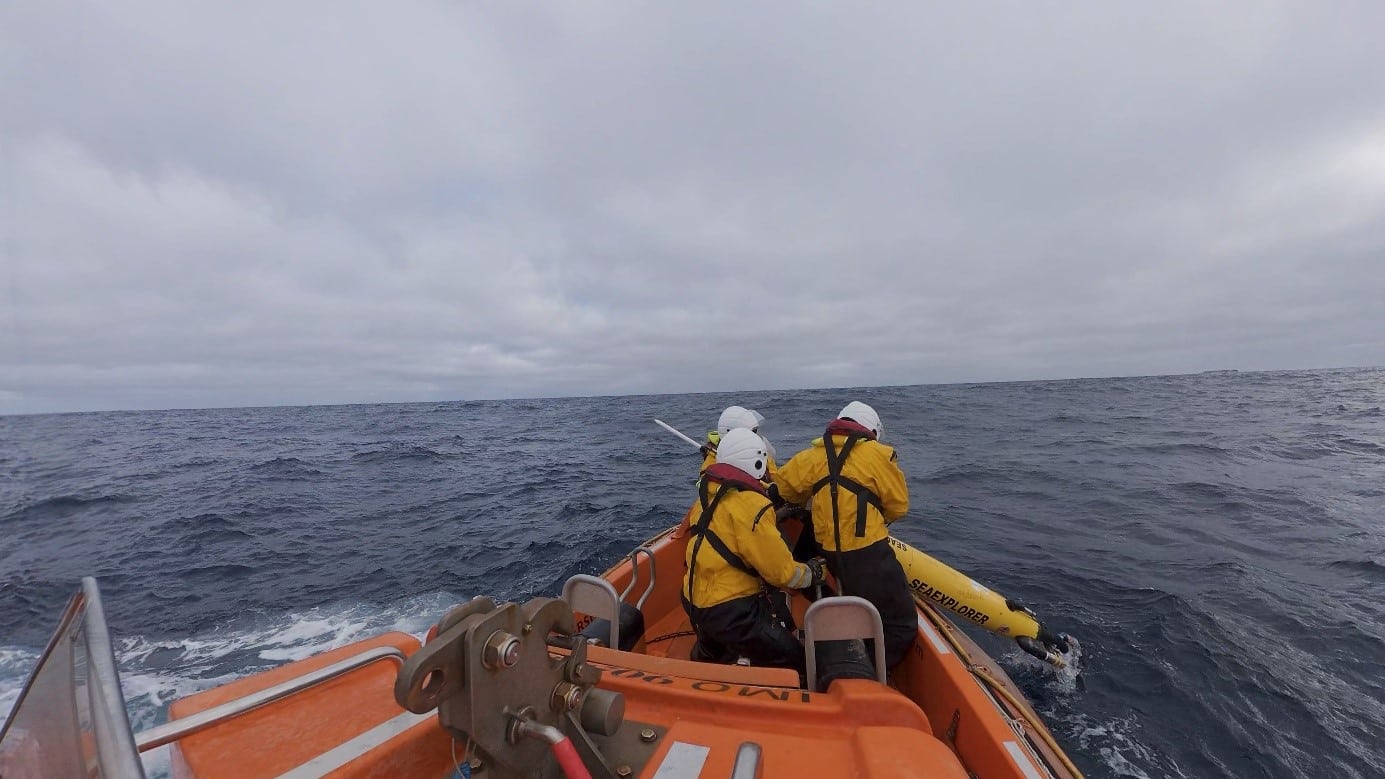
Retrieval of the glider from the Marion Dufresne’s workboat
Map of the route and estimated speed of the glider
Photo credit: Emerick Missud