



The CNRS Terre & Océan has just published an article on a study carried out by scientists from MIO-OSU PYTHEAS, LOV-Stamar, AD2M and LOCEAN – IPSL.
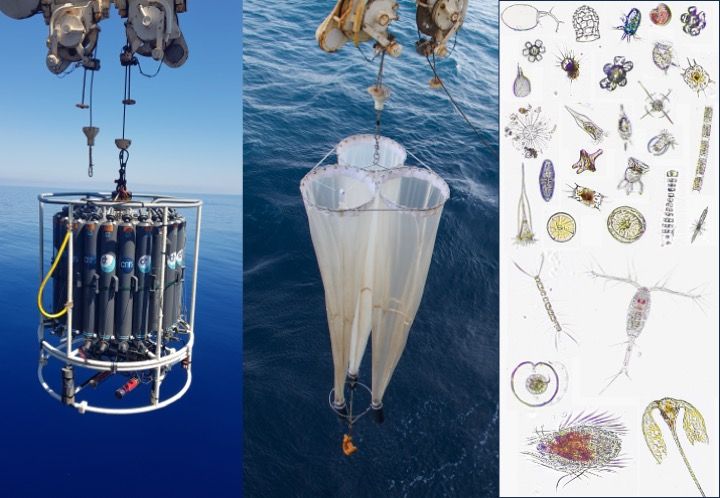
Using data from the MOOSE national observation service, scientists at the CNRS have developed an integrated monitoring system for planktonic communities to assess the long-term effects of climate variability and anthropogenic pressures on the marine ecosystems of the north-western Mediterranean, a veritable climate change hotspot. To characterise planktonic biodiversity across the entire basin, the authors combined environmental genomics approaches (environmental DNA metabarcoding), high-resolution automated imaging, and physical and biogeochemical data describing the various water masses during three oceanographic surveys in the north-western Mediterranean carried out between 2017 and 2019.
Read the article