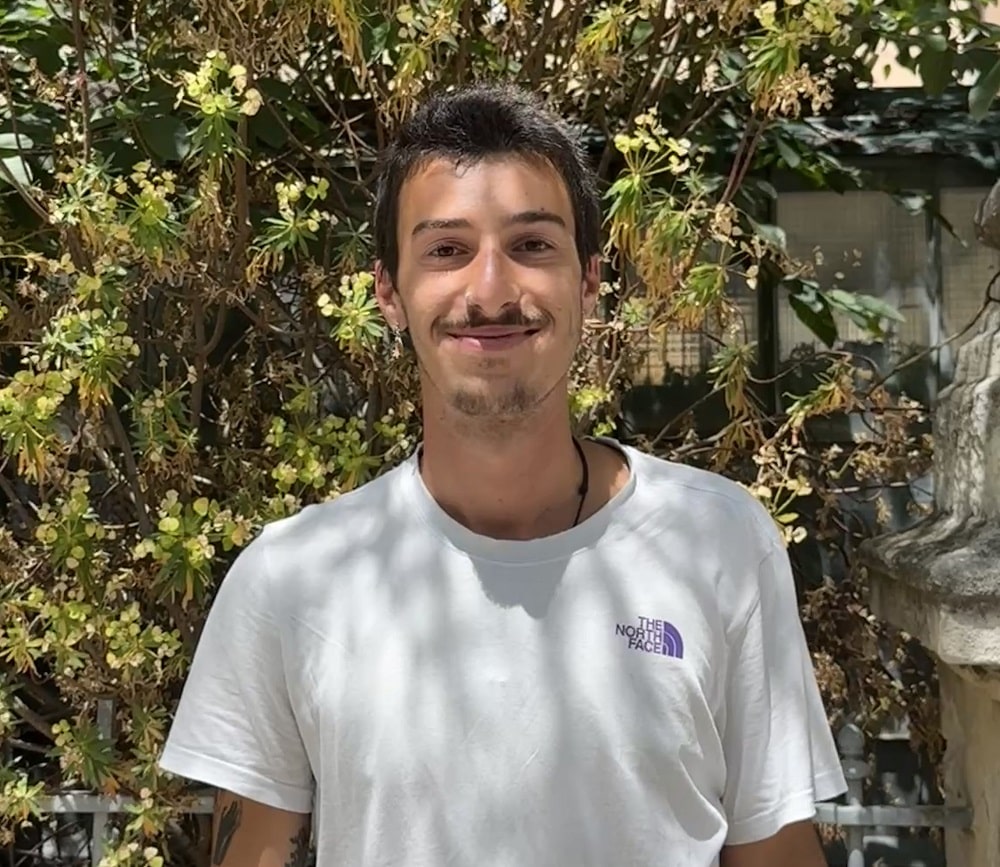




Ugo Guignard, a Master’s 2 student in LCE working with the MIO, will give a seminar in the LCE meeting room at St Charles on Tuesday 30 June 2026 à 14h00 on the theme: Emissions of Volatile Organic Compounds and their Relationship with Phytoplankton Communities.
Videoconference link
Abstract
Species-resolved volatile organic compound (VOC) emission inventories for marine phytoplankton remain incomplete, limiting the accuracy of marine biogenic gas flux parameterisations in atmospheric and climate models. In particular, the relative contributions of specific taxa to the budgets of key aerosol precursors – dimethylsulphide (DMS), methanethiol (MeSH) and isoprene – are poorly understood because field measurements combine signals from mixed communities. To address these gaps, this thesis combines two complementary approaches: the VACOA ship campaign aboard the Marion Dufresne II across the Southern and Indian Oceans (January–February 2026), providing large-scale in situ observations of VOCs, aerosol composition and phytoplankton communities across six oceanographic periods; and the SARNEIO laboratory incubation experiment, which compares VOC emissions from two ecologically contrasting phytoplankton species – Thalassiosira pseudonana (diatom) and Phaeocystis globosa (haptophyte) – under identical controlled conditions.
During VACOA, DMS concentrations peaked in frontal zones, as expected, but three findings deviated from predictions. The campaign-wide correlation between DMS and sulphate was negligible (ρ = −0.085), likely due to the multi-day atmospheric oxidation lifetime of DMS and to the variable marine boundary layer fraction, which reached zero per cent boundary-layer-dominated days during the biologically productive Polar Front period. MeSH concentrations showed a more consistent positive relationship with sulphate (ρ = +0.224), consistent with its faster oxidation kinetics. DMS and MeSH concentrations were strongly negatively correlated during the most productive periods (ρ = −0.70 and −0.82), suggesting competition between the DMSP lyase and demethylation pathways. Isoprene persisted in oligotrophic subtropical regions despite minimal phytoplankton biomass, showed no consistent diurnal cycle and was decoupled from nanophytoplankton abundance, likely indicating a significant abiotic photochemical source in the sea surface microlayer.
In SARNEIO, preliminary PTR-ToF-MS measurements revealed contrasting emission dynamics across all three compounds. P. globosa exhibited continuously elevated DMS and MeSH concentrations that declined with cell senescence, and near-zero isoprene concentrations, consistent with a high-DMSP haptophyte channelling antioxidant protection via the sulphur pathway. T. pseudonana displayed a delayed increase in DMS concentration coupled to the bloom peak, with no corresponding increase in MeSH concentration — suggesting that lyase activity predominates over demethylation during active growth, and a variable isoprene signal, the quantification of which awaits resolution of an elevated blank. These contrasts between the species imply that haptophyte- and diatom-dominated blooms contribute to atmospheric VOCs with different fingerprints and at different stages of the growth cycle.